When you want to find out what something is, you could point at it and ask:
https://learn.tobreak.com
0
https://learn.tobreak.com/wp-admin/admin-ajax.php
partez
Qu’est-ce que c’est ?

Qu’est-ce que c’est ?
(What’s this?)
C’est un livre.
(It’s a book.)
C’est une chaise.
(It´s a chair.)
Here is some useful vocabulary that you can use in the classroom and at home.
The word un, meaning “a” or “an,” is used before masculine nouns.
The word une (also meaning “a” or “an”) is used before feminine nouns.
Listen to the audio example
LA CLASSE et LA MAISON
| un bureau | → | desk |
| une chaise | → | chair |
| une chambre | → | bedroom |
| un crayon | → | pencil |
| une cuisine | → | kitchen |
| une école | → | school |
| une fenêtre | → | window |
| un lit | → | bed |
| un livre | → | book |
| une maison | → | house |
| une montre | → | watch |
| un papier | → | paper |
| un professeur | → | teacher |
| une salle à manger | → | dining room |
| une salle de bains | → | bathroom |
| un salon | → | living room |
| un stylo | → | pen |
| une table | → | table |
| une voiture | → | car |
EXERCICES
Exercices de prononciation
Here are some more consonants:
h
j
ill
il
h
This letter is never pronounced!
héros, histoire, heure, habitation, Hollande,
Hôtel, hors d’œuvre, hélicoptère, hippopotame,
herbe, homicide
j
This consonant is pronounced like the “z” in the English word “azure” (meaning light blue).
jeune, injuste, journal, jaune, Japon, réjouir, ajuster, Jupiter, joli, jambe, Jaguar, jupe, justice, joue
ill–il
These combinations are pronounced like the “y” in the English word “year.”
fille, soleil, œil, feuille, oreille, billet, bouteille, appareil, brillant, sillon, travail, travaille, réveil
Attention!

There are few exceptions when the “ill“ or “il“ is pronounced like the “l“ in the English word “love“:
mille, fil, ville, millionaire, crocodile
Il existe quelques exceptions où le « ill » ou « il » se prononce comme le « l » du mot anglais « love » :
mille, fil, ville, millionaire, crocodile

Current lesson
Leçon un
Main Menu
Breaking the French Barrier Beginner "A"
You are viewing this book in sample mode. Progress is not saved until you sign in.
Bienvenue
Ma famille
Est-ce que vous aimez l’éléphant rose ?
Rappel !
Un, deux, trois…
Quel jour sommes-nous aujourd’hui ? Quel temps fait-il aujourd’hui ?
Quelle heure est-il ?
Conversation practice
Exercices de Révision
Bienvenue
Le Québec
Vocabulaire (Transportation)
Key grammar concepts
A. Irregular verbs in the present tense
B. “Boot” verbs in the present tense
Rappel !
C. Definite an indefinite articles
D. Nouns: singular and plural forms
Oral practice
Writing practice
Conversation practice
Exercices de Révision
Bienvenue
La Belgique
La Suisse
Le principauté de Monaco
Vocabulaire
Key Grammar Concepts
A. Other irregular verbs: more “boot” verbs
B. Negative sentences
Rappel !
C. Agreement of adjectives
Oral practice
Writing practice
Conversation practice
Exercices de révision
Bienvenue
Le Maroc
L’Algérie
La Tunisie
Vocabulaire
Key grammar concepts
A. Other irregular verbs: more "boot" verbs
B. Prepositions
Rappel !
C. Pronouns after prepositions
Oral practice
Writing practice
Conversation practice
Exercices de révision
Bienvenue
Le Vietnam
Le Cambodge
Le Laos
Vocabulaire
Key grammar concepts
A. Other irregular verbs
B. Possessive adjectives
Rappel !
C. Direct object pronouns
D. Idiomatic expressions with "avoir"
Oral practice
Writing practice
Conversation practice
Exercices de révision
Bienvenue
Le Sénégal
La Côte D’Ivoire
Le Mali
Vocabulaire
Key grammar concepts
A. Other irregular verbs
B. Verbs conjugated with “avoir” in the passé composé
Rappel !
C. Indirect object pronouns
D. The expressions “il y a” and “c’est”
Oral practice
Writing practice
Conversation practice
Exercices de révision
Your Cart
Your cart is empty.
Subtotal: USD $0.00
Login
Registration
Password Recovery
Enter your username or email and we will send you a link to reset your password.
Report a Bug
Tell us what happened and our team will review it.
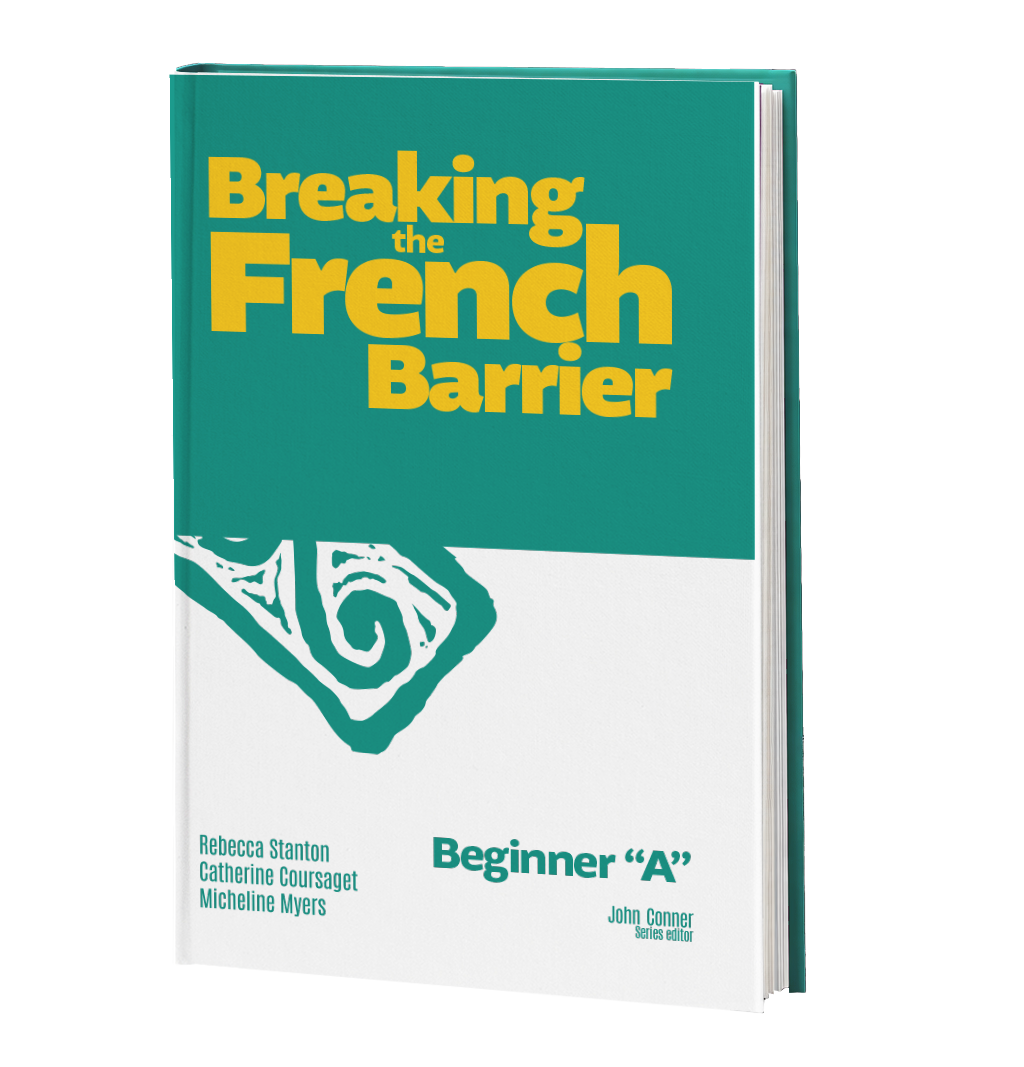
Breaking the French Barrier Beginner "A"